
India and the US have signed a framework agreement for defence cooperation for the next 10 years, enhancing their partnership and aiming for regional stability.

Regular money talks, setting up joint goals, and regular reviews can help couples stay aligned.
Regular money talks, setting up joint goals, and regular reviews can help couples stay aligned.
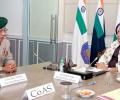
India and the US have agreed to work together to draft a comprehensive framework on defence cooperation, aimed at structuring the bilateral collaboration for the 2025-2035 period. The framework will cover multiple domains in land, air, maritime and space, and will focus on intelligence, logistics, operational and industrial engagement. The agreement comes ahead of Prime Minister Narendra Modi's planned trip to Washington, where he is expected to meet with US President Donald Trump to discuss boosting India-US cooperation in the areas of trade, energy and defence.
GSOMIA does not cover the exchange of classified information with Indian private industry. Washington wanted this covered too, given New Delhi's emphasis on the proposed 'strategic partnership' model of procurement.
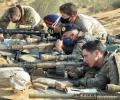
The 18th edition of exercise Yudh Abhyas is scheduled to take place from October 14 to 31, sources in the defence and military establishment said on Wednesday.
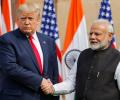
The China threat continues to resonate in the strategic partnership between India and the USA, points out Rup Narayan Das.

The talks between Singh and Esper came a day after Prime Minister Narendra Modi held a telephonic conversation with US President Donald Trump.

Gen Kenneth S Wilsbach, commander of the US Pacific Air Forces, said the US side held the interaction behind closed doors with most of the air chiefs of the region.

The armies of India and the US on Tuesday began an over two-week mega military exercise at a military facility in Uttarakhand with the aim of exchanging best practices and tactics in sync with growing defence ties between the two countries.

It is believed that the signing of BECA and the follow-up arrangements between the sides will allow India to use American inputs on geospatial intelligence and to enhance military accuracy of automated hardware systems and weapons like cruise, ballistic missiles and drones.
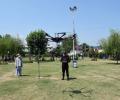
India and the United States have signed an agreement for cooperation in the development of Air-Launched Unmanned Aerial Vehicle (ALUAV), in yet another step to further expand bilateral defence and military cooperation.

Reports (not denied by India) that the USA had 'for the first time provided real-time details to their Indian counterparts on the Chinese positions and force strength in advance of a PLA incursion' into Tawang at the LAC in December 2022, helping India thwart China's expansionist designs, show how operationally effective the USA-India friendship has become on the ground. A engaging excerpt from Sreeram Chaulia's must-read new book, Friends: India's Closest Strategic Partners.
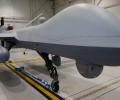
The defence ministry on Thursday accorded its approval to procure 30 MQ-9B Predator drones from the US to crank up the surveillance apparatus of the armed forces, especially along the frontier with China, people familiar with the development said.

The American platforms at the exercise 'Cope India' that started off Kalaikunda will also include a fleet of F-15 E fighter jets, C-130 and C-17 transport aircraft.

The US has deployed its naval carrier strike group, led by the nuclear-powered aircraft carrier USS Ronald Reagan, as well as a fleet of F-18 fighter jets and E-2C Hawkeye all-weather aircraft for the exercise, officials said. The Indian assets at the exercise included Jaguar and Sukhoi-30MKI fighter jets, IL-78 air-to-air refuelling tanker aircraft, Airborne Warning and Control System aircraft and warships Kochi and Teg. The Indian Navy has also deployed a fleet of P8I maritime surveillance aircraft and MiG 29K jets, apart from other platforms.
The new framework of the ministerial dialogue was initiated in order to provide a forward-looking vision for the strategic partnership between the two countries.

General Mattis has been the most steadfast champion in Trump's cabinet of the US-India defence relationship. If Trump chooses a more pliable successor, the Pentagon's attention could go off India.
The two-plus-two dialogue will be held on Tuesday. A host of crucial bilateral, regional and global issues including China's efforts to expand influence in the Indo-Pacific region as well as its aggressive behaviour in eastern Ladakh is likely to figure in the talks.

The in-person talks are taking place at a time when India is locked in a tense standoff with China in eastern Ladakh and the Trump administration's growing friction with Beijing over a host of issues including trade tariff and the Chinese military's offensive manoeuvres in the South China Sea.

The US remained "watchful" over developments along India's frontier with China as it cannot take its eyes off the regional security issues, a senior American official said on Wednesday against the backdrop of the over 29-month border standoff in eastern Ladakh that has significantly frayed ties between the two neighbours.

The agreement will allow sharing of high-end military technology, classified satellite data and critical information between the two countries.

Defence Minister Nirmala Sitharaman and her American counterpart James Mattis reviewed ongoing initiatives to further strengthen bilateral defence cooperation.
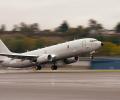
The P-8I, which is widely acknowledged to be the world's most deadly LRMR-ASW aircraft, is a derivative of the Boeing 737-800 airliner, onto which a plethora of sensors and weaponry has been fitted.
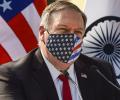
Severely critical of China, Pompeo, cited killing of Indian Army personnel in the Galwan Valley in eastern Ladakh in a clash with the Chinese military, and asserted that both India and the US are taking steps to strengthen cooperation against all threats and not just those posed by the Chinese Communist Party.

Admiral Philips Davidson, Commander of the US Indo-Pacific Command, also told the powerful Senate Armed Services Committee on Tuesday that China's recent activities along the Line of Actual Control have opened India's eyes to what cooperative effort with others might mean for their own defensive needs as he observed that New Delhi, in the very near term, will deepen its engagement with the Quad.
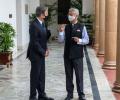
We do not know, because there has been no discussion, no transparency and most likely no real thinking on this matter at our end, observes Aakar Patel.

Blinken and Indian leaders on Wednesday will discuss a plethora of pressing issues such as the fluid situation in Afghanistan, regional security concerns, COVID-19 response and ways to boost Indo-Pacific engagement, people familiar with the agenda of talks said.
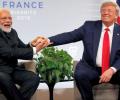
'The US President is joining the Prime Minister in addressing a huge Indian diaspora event in Houston and they will also meet on the margins of the UNGA in New York'

With the situation in Ladakh tense and no resolution in sight the trigger to take the India-US relationship to a transformational one is already there, observes Lieutenant General Syed Ata Hasnain (retd).

Once installed, the LAIRCAM system increases crew-warning time, decreases false alarm rates and automatically counters advanced intermediate range missile systems.

On Tuesday, Pompeo and Esper will hold the 2+2 talks with External Affairs Minister S Jaishankar and Defence Minister Rajnath Singh, covering the entire expanse of defence and security ties as well as key regional and global issues.
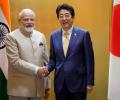
With the signing of the pact, the Quad grouping of India, Japan, Australia and the US is set to gain more heft now, notes Dr Rajaram Panda.

'As far as acquisition of Russian equipment is concerned, with about 70% of Indian military equipment being of Russian origin, a sudden decision to abandon imports from Russia is not feasible,' points out Brigadier S K Chatterji (retd).

'The US and India continue to use their deepening relationship to build new partnerships within and beyond the Indo-Pacific.'

Warning India against the increasing Chinese influence in the Indian Ocean region, a top American military commander on Wednesday stressed on the need to sign two key agreements between India and the US for joint tracking.

United States Defence Secretary Lloyd J Austin arrived in India on Friday on a three-day visit, aimed at further boosting bilateral defence and security ties in the wake of China's growing military assertiveness in the region including the Indo-Pacific.

The elephant in the room will permeate the conversations, predicts Rup Narayan Das.
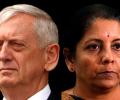
Sitharaman has completed just 19 days as defence minister and is also pre-occupied with the Gujarat assembly election, notes Ajai Shukla.

Thailand expressed interest in the Indian defence industry and its experience and expertise in the field of defence R&D and production. Modi welcomed Thai investments in India in the potential areas under the 'Make in India' initiative, especially in the manufacturing sector, infrastructure development, tourism and hospitality facilities.
 © 2026 Rediff.com - Advertise with us - Disclaimer - Privacy Policy - Sitemap - Feedback - About us - Terms of use - Grievances